
As an IBCLC, I have seen my fair share of babies who are fussy at the breast or those who refuse to latch at all. I try to help babies to latch, without using my hands, to empower the mother, or to help the baby to find their own way to the breast. Some babies just struggle! Even after ruling out tongue tie, food sensitivities etc. I studied craniosacral therapy as I felt we were missing something in our efforts to get babies to breastfeed. Babies have since shown me that this fussy behaviour is often related to difficulty during the birth process (or an overwhelming experience inutero or around the birth). Any type of birth can be overwhelming for the baby and can imprint on to the body’s tissues and nervous system. Fussing, crying, arching and repetitive body movements can be viewed as baby body language. Baby has a story to tell and listening to it may help resolve their latching difficulties (and general unsettled behaviour) in those early days.
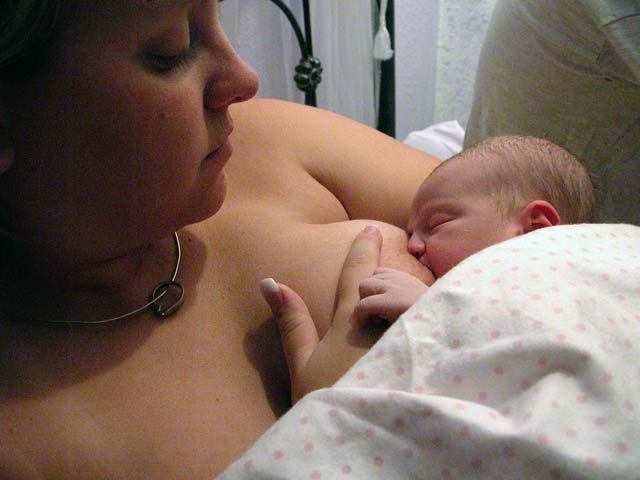
Lets start at the beginning…. the first feed after birth.
In an ideal world we would not consider the birth to be complete until baby latches on to the breast. The World Health Organization states that “the process of childbirth is not finished until the baby has safely transferred from placental to mammary nutrition.” In the interim between baby coming out of the birth canal and latching, the baby should be placed on the mother’s body and allowed time and space to find their way to the breast to latch. Baby led attachment is the process of a baby finding their own way to the breast. Also called the breast crawl, babies use their innate reflexes and their sense of smell to guide them to the nipple. Most babies will latch and start sucking within an hour if given the opportunity to do this straight after birth. Baby may use this time to integrate any stress from their birth journey, they may need to close their eyes and rest or to express their story through baby body language. Some of these babies, particularly those who have had a difficult birth, may appear to struggle to latch and instead may:
- get to the nipple and start arching away, perhaps sucking the mother’s arm
- get to the nipple and fuss and cry
- go past the nipple and become irritated and upset
Parents may feel confused about this fussy, chaotic behaviour and will then help babies to the breast in a mother-led manner – baby eventually needs to be fed. But… what if instead, all who are present, can hold a curiosity around this behaviour? What is baby trying to tell us? “Mum that was intense! /“It hurt my head” / “I was stuck, my head was in the wrong position” / “I thought I might die” / “I lost my way”. They will often show in their body language what was happening at the time of their distress e.g.
- pushing or kicking the feet
- touching the places on their head that hurt eg. pulling an ear or swiping movements
- repetitive movements or behaviours
- memory crying – sadness, disorientation, panic
Parents and birth attendants (and most people in our society) underestimate the impact that birth has on a baby. We forget that babies are conscious beings having their own experiences that can be overwhelming for them. We also don’t realise that babies, if unmedicated, are active participants in the birth process. They work with their mother during contractions by using their feet to push off the side of the womb* and they manoeuvre their head and body in a very specific sequence to move forward through the birth canal. These cardinal movements show up as baby body language. The sequence of movements reflects the fact that the pelvic inlet is initially widest side to side, in contrast to the pelvic outlet which is widest front to back. The order goes like this:
- Engagement: First, baby’s head is engaged in the birth canal looking to the side, facing one of their mother hips.
- Flexion.: As the baby moves down and contacts the pelvic floor, the head is flexed – chin to chest to point the narrowest part of the head towards the exit.
- Internal rotation: Next, the baby rotates the head and shoulders 90 degrees due to the change in pelvic dimensions, so the baby’s head is facing towards the back.
- Extension: Baby moves past the mum’s pubic bone by extending their head to move the head out of the birth canal.
- Restitution: The baby’s head then turns 45 degrees to align with the shoulders
- External rotation: Finally, the shoulders repeat the corkscrew movements which reflect in the babies head turning, now visible outside of the birth canal. And baby is born!
*Interestingly all images of babies during these movements have babies legged tucked up instead of extended and pushing off the womb.
Birth injuries, complications and associated emotional stresses occur when baby has had difficulty completing these cardinal movements of birth. Their birth journey is further complicated by abnormal inutero positioning, or when babies have their hands by the side of their face during birth or if the umbilical cord is short or entangled. Babies will communicate all this to us through baby body language – as a culture we just haven’t taken notice. And it is when babies are making connection at the breast that this expression might play out. The innate reflexes babies use to find the breast are reminiscent of the cardinal movements (eg. rooting, pushing with feet and head extension). These movements tend to show up during a cranio treatment when the baby is listened to at a deep level and given the opportunity to complete and express their birth story.
Having an understanding of the cardinal movements means we might recognise when a baby is exhibiting similar behaviours at the breast. If baby is extending the head or arching away from the breast – maybe the birth was interrupted at that birth stage and an emergency c-section was required? Or are they rotating their head? – maybe they had difficulty manoeuvring their shoulders out – e.g. in shoulder dystocia?. These are signs of the birth imprint, that is still cycling in the baby’s system and they are trying to integrate the experience. See them as cues to pay attention. If parents and birth attendants have this awareness then they can help babies to fully express and integrate their birth journey.
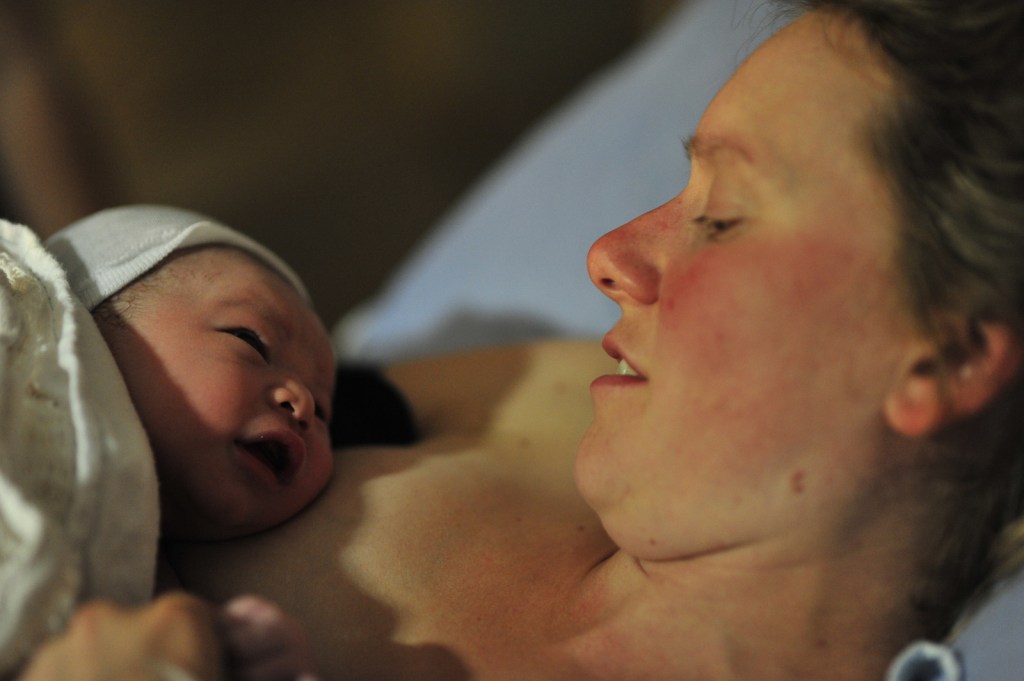
Here are some ways to support the integration of birth stress, ideally straight away or soon after the birth:
- Slow down – after birth don’t rush to clean, wrap, wash or weigh the baby. Allow baby to rest on mum’s belly/chest and then simply wait. The birth pause takes this one step further and suggests pausing even before baby arrives on the mothers’ chest after birth. This is a powerful, once in a lifetime, moment! Baby and mum have just accomplished something difficult and amazing.
- Allow mum and bub to pause, to breathe, to take each other in. To look at and smell each other. A mother’s body is baby’s safe space – her habitat! Lots of research shows baby’s heart rate, temperature, respiratory rate and blood sugar levels will regulate when held skin to skin after birth. Viewed holistically, this means their system is settling down and starting to integrate her birth experience.
- Then when baby is ready, they will start to look for the breast – they are wired to do this. Not because they are hungry – not yet. They are looking for connection and comfort.
- Watch baby’s behaviour and body language on the way to the breast. They may need to tell you what just happened to them e.g. “My head hurt”, “I was scared”,” I thought I might die”*
- Listen and hold space. Dads or a doula can hold space for you and baby by making sure no one interrupts this (unless there is a medical emergency).
- Babies may cry – this a memory cry to express emotion – it was a big journey!
- Verbally acknowledge babies’ story and journey and trust baby will move to the breast when they are finished expressing themself. The sound of their parents’ voices are incredibly soothing and supportive and they will appreciate the connection.
*In older babies you can even mirror your empathic listening by mirroring/copying babies repetitive body movements. I have treated older babies who respond so well to this. They feel seen and heard!
If this all seems too much to do straight after birth, it’s ok. It is never too late to integrate the story. When I had my second child, I intended to do skin to skin and baby led attachment but I was unable to be present until my placenta naturally left my body (physiological third stage). My placenta took an hour to be birthed and my uterus was still painfully contracting. Parents can do it whenever they feel ready – in hospital, when you get home or with therapeutic support. Having a curiosity around baby’s story helps parents to appreciate the depth of experience and innate wisdom of their baby. This deep empathy can help a baby to integrate a difficult birth experience and help with latching difficulties.
In my work I support babies to express and integrate their birth (some babies even have the impulse to physically re-enact the birth sequence to feel complete). This means they no longer have to hold this unacknowledged story in their body and carry it with them for the rest of their life*. I believe all babies should have at least one craniosacral treatment in the first few weeks of life. If you feel you would like support with this then don’t hesitate to book a baby cranio treatment or combined lactation/cranio appt. The earlier the better! I can also offer this service over zoom.
*Birth imprints also show up in adult bodies during cranio treatments.
 Flow Cranio and Lactation